我細個嗰陣,仲係個細路女……我就係個麻煩。
ngo5 sai3 go3 go2 zan6, zung6 hai6 go3 sai3 lou6 neoi2……ngo5 zau6 hai6 go3 maa4 faan4.
When I was little, still a little girl... I was trouble.
Slow. She is telling a bedtime story. The pause before 麻烦 is the whole line.
麻烦 not 问题, the word a tired parent actually uses, not the literary one.
唔係我有麻煩。我本身就係。
m4 hai6 ngo5 jau5 maa4 faan4. ngo5 bun2 san1 zau6 hai6.
Not that I had trouble. I was it.
The correction matters more than the sentence. Tiny pause before it.
爸媽日日都話:你就係嚟討債嘅。
baa1 maa1 jat6 jat6 dou1 waa6: nei5 zau6 hai6 lai4 tou2 zaai3 ge3.
My parents said it every day: you're a little debt collector.
Almost amused. Quoting them, not hurt by them.
讨债鬼 is the classic thing Chinese parents say to a hard child: you came to collect a debt from a past life. Affectionate, exhausted and genuinely dark at once. She grew up to become one literally.
佢哋欠我嘅,都唔少……咁咪扯平囉。
keoi5 dei6 him3 ngo5 ge3, dou1 m4 siu2……gam3 mai6 ce2 ping4 lo1.
But they owed me plenty too... so we're settled.
Flat. Bookkeeping, not bitterness.
两清 / 扯平 is an accounting term. The debt is closed. It answers 讨债鬼 from the line before. This pair does not exist in the English.
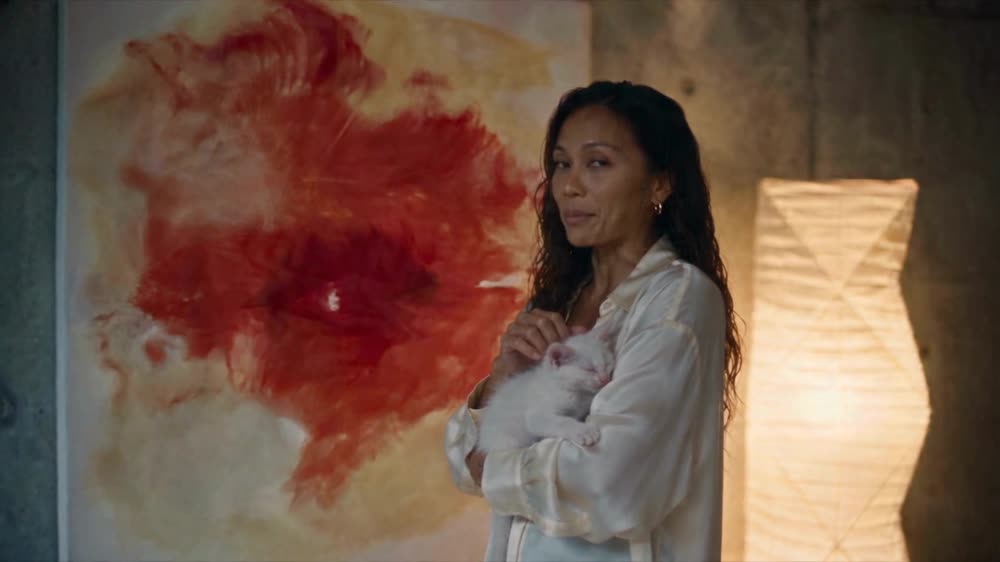
我想要嘅,不過係有人咁樣攬住我。好似隻貓仔咁。好細隻,毛茸茸,有人惜嗰種。
ngo5 soeng2 jiu3 ge3, bat1 gwo3 hai6 jau5 jan4 gam2 joeng2 laam5 zyu6 ngo5. hou2 ci5 zek3 maau1 zai2 gam2. hou2 sai3 zek3, mou4 jung4 jung4, jau5 jan4 sik1 go2 zung2.
All I wanted was for someone to hold me like this. Like a kitten. Small. Soft. The kind someone dotes on.
The softest lines in the piece. She is stroking a real kitten while saying this.
疼 / 惜 means to dote on tenderly. 爱 would be flat and wrong here.
不過,凡係嚟同我搞事嘅,最後都明白我爸媽早就知嘅嘢。
bat1 gwo3, faan4 hai6 lai4 tung4 ngo5 gaau2 si6 ge3, zeoi3 hau6 dou1 ming4 baak6 ngo5 baa1 maa1 zou2 zau6 zi1 ge3 je5.
But everyone who came to make trouble found out what my parents already knew.
The temperature drops here. Same volume, colder.
找麻烦 echoes 麻烦 from the first line. That rhyme is not in the English.
喺西方,佢哋鬧人叫 pussy。意思係你軟弱。
hai2 sai1 fong1, keoi5 dei6 naau6 jan4 giu3 pussy. ji3 si1 hai6 nei5 jyun5 joek6.
In the West, they call you a pussy. It means you're weak.
She names the foreign word the way you'd name a strange dish on a menu. Curious, not offended. Say the English word plainly inside the Chinese.
The English insult only works if you accept that being a woman is the weak thing. She is about to point out that Chinese never agreed to that.
中文冇呢句話。貓就係貓。
zung1 man2 mou5 ni1 geoi3 waa6. maau1 zau6 hai6 maau1.
Chinese doesn't have that sentence. A cat is just a cat.
A small shrug in the voice. She is not defending anything.
我哋只會話:老虎唔發威,你當我係病貓。
ngo5 dei6 zi2 wui6 waa6: lou5 fu2 m4 faat3 wai1, nei5 dong1 ngo5 hai6 beng6 maau1.
We only say: the tiger hasn't roared, so you took me for a sick cat.
The wisdom beat. The room is listening and she knows it, but she still says it to herself.
The proverb every Chinese speaker knows. 病猫 is a SICK cat, not a cute one. It is the harmless-looking thing you misjudged. Where the English insult is about being female, this is about being underestimated. That gap is the point of the whole scene.
不過呢……“I am not a cute little pussy.”
bat1 gwo3 ne1……“I am not a cute little pussy.”
However... “I am not a cute little pussy.”
The line of the film, and the only full English sentence she speaks. Cold, flat, final. Do not push it. The film cuts away right after. Do not sell the joke, the cut does it.
It is in English on purpose: her own language cannot say it. The code-switch is the argument.
……就好似佢噉。
……zau6 hou2 ci5 keoi5 gam2.
...Like that one.
A beat later, completely flat, with the smallest glance. The film cuts to the artwork on this line.
我小时候,还是个小姑娘……我就是个麻烦。
wǒ xiǎo shí hòu, hái shì gè xiǎo gū niáng……wǒ jiù shì gè má fán.
When I was little, still a little girl... I was trouble.
Slow. She is telling a bedtime story. The pause before 麻烦 is the whole line.
麻烦 not 问题, the word a tired parent actually uses, not the literary one.
不是我有麻烦。我本身就是。
bù shì wǒ yǒu má fán. wǒ běn shēn jiù shì.
Not that I had trouble. I was it.
The correction matters more than the sentence. Tiny pause before it.
爸妈天天都说:你就是个讨债鬼。
bà mā tiān tiān dōu shuō: nǐ jiù shì gè tǎo zhài guǐ.
My parents said it every day: you're a little debt collector.
Almost amused. Quoting them, not hurt by them.
讨债鬼 is the classic thing Chinese parents say to a hard child: you came to collect a debt from a past life. Affectionate, exhausted and genuinely dark at once. She grew up to become one literally.
可他们欠我的,也不少……那就两清了。
kě tā men qiàn wǒ de, yě bù shǎo……nà jiù liǎng qīng le.
But they owed me plenty too... so we're settled.
Flat. Bookkeeping, not bitterness.
两清 / 扯平 is an accounting term. The debt is closed. It answers 讨债鬼 from the line before. This pair does not exist in the English.
我想要的,不过是有人这样抱着我。像只小猫。小小的,毛茸茸的,有人疼的那种。
wǒ xiǎng yào de, bù guò shì yǒu rén zhè yàng bào zhe wǒ. xiàng zhī xiǎo māo. xiǎo xiǎo de, máo róng róng de, yǒu rén téng de nà zhǒng.
All I wanted was for someone to hold me like this. Like a kitten. Small. Soft. The kind someone dotes on.
The softest lines in the piece. She is stroking a real kitten while saying this.
疼 / 惜 means to dote on tenderly. 爱 would be flat and wrong here.
可是,每个来找我麻烦的人,最后都明白了我爸妈早就知道的事。
kě shì, měi gè lái zhǎo wǒ má fán de rén, zuì hòu dōu míng bái le wǒ bà mā zǎo jiù zhī dào de shì.
But everyone who came to make trouble found out what my parents already knew.
The temperature drops here. Same volume, colder.
找麻烦 echoes 麻烦 from the first line. That rhyme is not in the English.
在西方,他们骂人叫 pussy。意思是你软弱。
zài xī fāng, tā men mà rén jiào pussy. yì si shì nǐ ruǎn ruò.
In the West, they call you a pussy. It means you're weak.
She names the foreign word the way you'd name a strange dish on a menu. Curious, not offended. Say the English word plainly inside the Chinese.
The English insult only works if you accept that being a woman is the weak thing. She is about to point out that Chinese never agreed to that.
中文里没有这句话。猫就是猫。
zhōng wén lǐ méi yǒu zhè jù huà. māo jiù shì māo.
Chinese doesn't have that sentence. A cat is just a cat.
A small shrug in the voice. She is not defending anything.
我们只说:老虎不发威,你当我是病猫。
wǒ men zhǐ shuō: lǎo hǔ bù fā wēi, nǐ dāng wǒ shì bìng māo.
We only say: the tiger hasn't roared, so you took me for a sick cat.
The wisdom beat. The room is listening and she knows it, but she still says it to herself.
The proverb every Chinese speaker knows. 病猫 is a SICK cat, not a cute one. It is the harmless-looking thing you misjudged. Where the English insult is about being female, this is about being underestimated. That gap is the point of the whole scene.
不过呢……“I am not a cute little pussy.”
bù guò ne……“I am not a cute little pussy.”
However... “I am not a cute little pussy.”
The line of the film, and the only full English sentence she speaks. Cold, flat, final. Do not push it. The film cuts away right after. Do not sell the joke, the cut does it.
It is in English on purpose: her own language cannot say it. The code-switch is the argument.
……就像它。
……jiù xiàng tā.
...Like that one.
A beat later, completely flat, with the smallest glance. The film cuts to the artwork on this line.